In an easily missed and poorly announced technical change to Controlled Drug Laws in Switzerland, all carbamates of controlled substances are now also considered controlled. Unlike regular updates that simply add new substances or areas of chemical space, this subtly alters the definition of how all existing controlled substances in Switzerland are defined as controlled.
 About the author
Joe Bradley is a Biochemist with decades of experience in controlled drug regulations, drug discovery and cheminformatics. He has spent the last 12 years working to improve controlled drug and regulatory compliance within the chemicals and pharmaceuticals industry, through the development of software solutions which allows the rapid and accurate identification of controlled and regulated chemicals.
He founded Scitegrity in 2011 and the tools he helped create are now used by many of the worlds top chemical and pharmaceutical companies, specialist controlled drug suppliers and regulators.
He has consulted for regulators globally, helping to refine and assess the impact of proposed controlled drug regulations before final enactment.
When not absorbed in chemical regulations you'll find him on is skateboard, trials bike or with snooker cue in hand.

Switzerland have added carbamates to the list of variations/derivatives under control within the Verordnung des EDI über die Verzeichnisse der Betäubungsmittel, psychotropen Stoffe, Vorläuferstoffe und Hilfschemikalien (Regulation of EDI over the lists of narcotics, psychotropic substances, precursors and auxiliary chemicals). This affects items in directories A,B,C,D and E (named substances and generics)
In an unusual move, not previously seen in any other country, Switzerland has now controlled all carbamates of named controlled substances. Previously all ethers, ester, salts and stereoisomers of named controlled substances were also controlled – inline with international conventions and other countries.
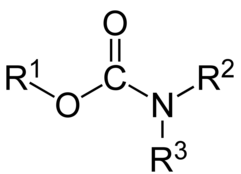
Carbamates are a class of amine protecting groups that are widely used in organic synthesis. They are particularly useful in multi-step reactions due to their ability to be selectively added and removed under mild conditions. In this case it means a carbamate of a controlled substance could easily be reacted into the controlled substance.
This means that in Switzerland, a listed controlled substance (or area of controlled chemical space) when attached to other chemistry via a carbamate group (see above) will make the entire molecule controlled under controlled drugs laws.
This affects all substances in directories A,B,C,D and E, so also includes generic statements, used extensively in Switzerland, which controls areas of chemical space.
Previously, we have only seen carbamates controlled in very specific examples, such as the USA, where the Drug Enforcement Agency also controls carbamates of 4-piperidone, a commonly used drug precursor chemical.
With the USA and now Switzerland now controlling carbamates, could this be the start of a wider trend to control carbamates of controlled substances by default?
Do you want to be able to easily and automatically check if your chemicals are controlled and regulated around the world - even for novel and propriatory chemicals - then you need Controlled Substances Squared.
Trusted by our Clients